Glen Nant field trip Tue 24 Feb

Our next field trip will be on Tue 24 Feb at Glen Nant national nature reserve near Taynuilt, an area of ancient Atlantic woodland with an exceptionally rich lichen flora. There’s a good chance of Red Squirrels, and perhaps even an early spring flower or two peeping out. Nobody won the prize for the first Read More …

LNHG Talk – Tuesday 10th March

‘Adapting to the North’ :- A talk by Etsy Wilcox on adaptations of Arctic wildlife to cold weather’ ‘What the deep sea can tell us about climate change’ : – A talk by Rachel Vezza on the Faroe-Scotland channel deep water research. ‘The Loch Etive Glacier’ : – A talk by Allan Audsley, exploring how Loch Read More …

LNHG Talk – Tuesday 10th February

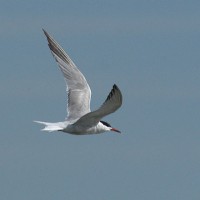
‘Seabirds, Insects and other interesting forms of life in Argyll’  Speaker :- Clive Craik. Venue:  Seil Island Hall,  Ellenabeich    Time:  1930 hrs. This will be preceded by the LNHG AGM starting at 1900 hours. All members are welcome to attend.  Admission: Free to members, £2 to non-members, or join at the door. Coffee, tea and Read More …

Dick Peebles talk rearranged

The 13 January talk by Dick Peebles was cancelled due to snow blocking the roads. This talk has been rearranged for Tuesday 12 May. Dick is also hoping to fit in an outing to look for spring fungi the day before or after the talk (or even both days). Carl

Flute Lichen (Menegazzia terebrata)

The Flute Lichen is easy to recognise with its hollow or inflated thallus perforated with holes (like a flute).  The other two species with a hollow thallus are Hypogymnia tubulosa and H physodes.  They have larger lobes than the Flute Lichen and do not have holes.  They are both much commoner than the Flute Lichen Read More …

Tree Lungwort (Lobaria pulmonaria)

This lichen is easy to find and easy to recognise.  It is large, green, and covered with a network of ridges.  It is found on trees with alkaline bark, such as hazel, willow, ash, sycamore, mature oaks and beech.  It also sometimes grows on rocks in shady humid places.  It is only attached at the Read More …

Hebrew Character (Orthosia gothica)

The Hebrew Character is one of the commonest early spring moths, and is easily recognised by the black mark on each wing which supposedly looks like the Hebrew letter N. It can appear in late February but most sightings are in March or April, with a few still on the wing in May. This moth Read More …

Marsh Violet (Viola palustris)

The Marsh Violet or Bog Violet is common but often missed, as it flowers in April in the sort of places that botanists tend not to visit until later in the year.  It can be recognised by its leaves, once known, but the best way to get to know it initially is to find it Read More …

LNHG Talk – Tuesday 13th January 2015

Our next talk will be on The Life and Times of Thomas Hopkirk, by Dick Peebles, chairman of Clyde & Argyll Fungus Group.  Hopkirk (1785-1841) was a pioneer of Scottish botany and mycology and founder of the Glasgow Botanic Gardens. Those who’ve been on fungus forays with Dick will know him as a very entertaining Read More …

LNHG cycle track field trip Tue 25 Nov

This month’s midweek field trip is along the Sustrans cycle track from Lettershuna to Lurignish. This walk was originally announced for December 2013 but was cancelled due to extreme weather conditions. The forecast for  Tuesday is quite the opposite: dry and calm. Meet at 10 a.m. at the long layby just after the road meets Read More …